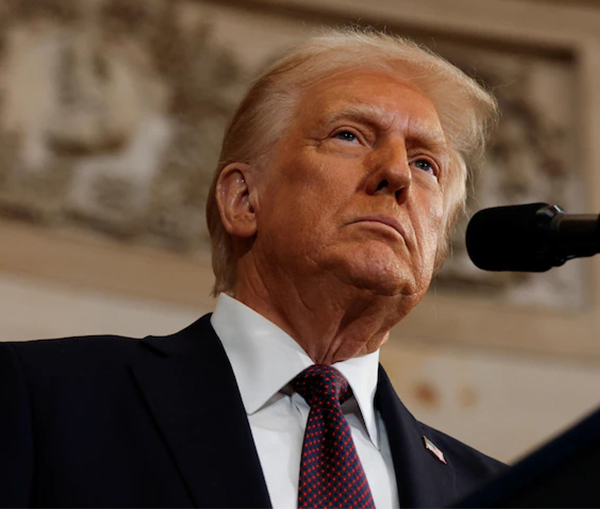
On April 9, 2025, during the so-called “Liberation Day,” President Donald Trump announced the first wave of tariffs, applying to all countries globally. He claimed that foreign nations had long taken advantage of the United States through the unfair tariffs on American goods.
“Every country on Earth has taken advantage of the United States—those days are over.”
What are tariffs, and their purpose?
Tariffs are taxes applied to imported goods, typically calculated as a percentage of their value. Importing businesses are required to pay these charges to the government when the goods enter the country.
The policy is aimed to encourage domestic production and reduce reliance on big global suppliers like China. Supporters argue that the tariffs are necessary to bring back American manufacturing, while critics warn of inflation and trade retaliation.
Nobel Prize-winning economist Paul Krugman argued that the United States was abandoning its leadership in global trade.
“The rules governing tariffs and the negotiating process that brought those tariffs down over time grew out of the Reciprocal Trade Agreements Act, devised by Roosevelt in 1934 … It was, in fact, one of America’s greatest policy achievements. Donald Trump burned it all down,” he wrote on his page
Trump announced during a speech at the White House Rose Garden:
“American steelworkers, autoworkers, farmers and skilled craftsmen, we have a lot of them here with us today, they really suffered gravely. They watched in anguish as foreign leaders have stolen our jobs, foreign cheaters have ransacked our factories, and foreign scavengers have torn apart our once beautiful American dream. “
He later presented a chart showing the “Reciprocal Tariffs” rates imposed on each country.
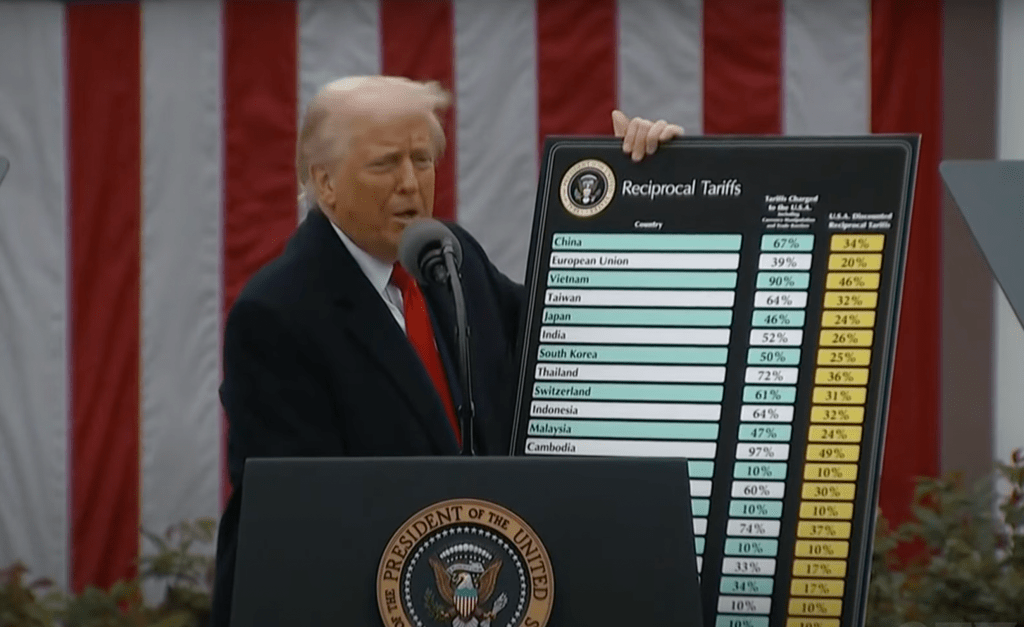
A universal baseline tariff of 10% has been set on all imports into the United States.
The current tariffs are not final and may be adjusted depending on how other countries respond. President Trump emphasised that any retaliatory measures would lead to a second wave of U.S. tariffs, making them not only as a tool for economic protection but also as leverage in international negotiations.
“If they hit us back, we’ll hit them harder. Much harder.”
Global response and countermeasures to Trump’s tariffs.
China was initially targeted with an additional 34% tariff, bringing the total to 54% on its exports. Beijing later announced a retaliatory measure, an 84% tariff set to take effect on April 10. In response, the United States declared it would escalate further, raising tariffs on Chinese imports to a total of staggering 125% taking effect on April 12, signalling a sharp escalation that borders on a full-scale trade war.
European Union received a 20% tariff, and has approved retaliatory tariffs targeting approximately €21 billion worth of U.S. goods in response to U.S. tariffs on steel and aluminium. These measures are to be implemented , with the first set taking effect on April 15, 2025.
India faced a 26% tariff but has not entered into confrontation by imposing counter-tariffs. Instead, it is seeking a diplomatic resolution, aiming to finalise a trade deal with the U.S. by autumn 2025.
However, Donald Trump came under intense pressure from the stock markets, and made a U-turn. He agreed to introduce a 90-day pause on his tariffs, but kept the 10% tariff on nearly all global imports.
Ursula von der Leyen President of the European Commission said in a statement released on Thursday morning 10th April:
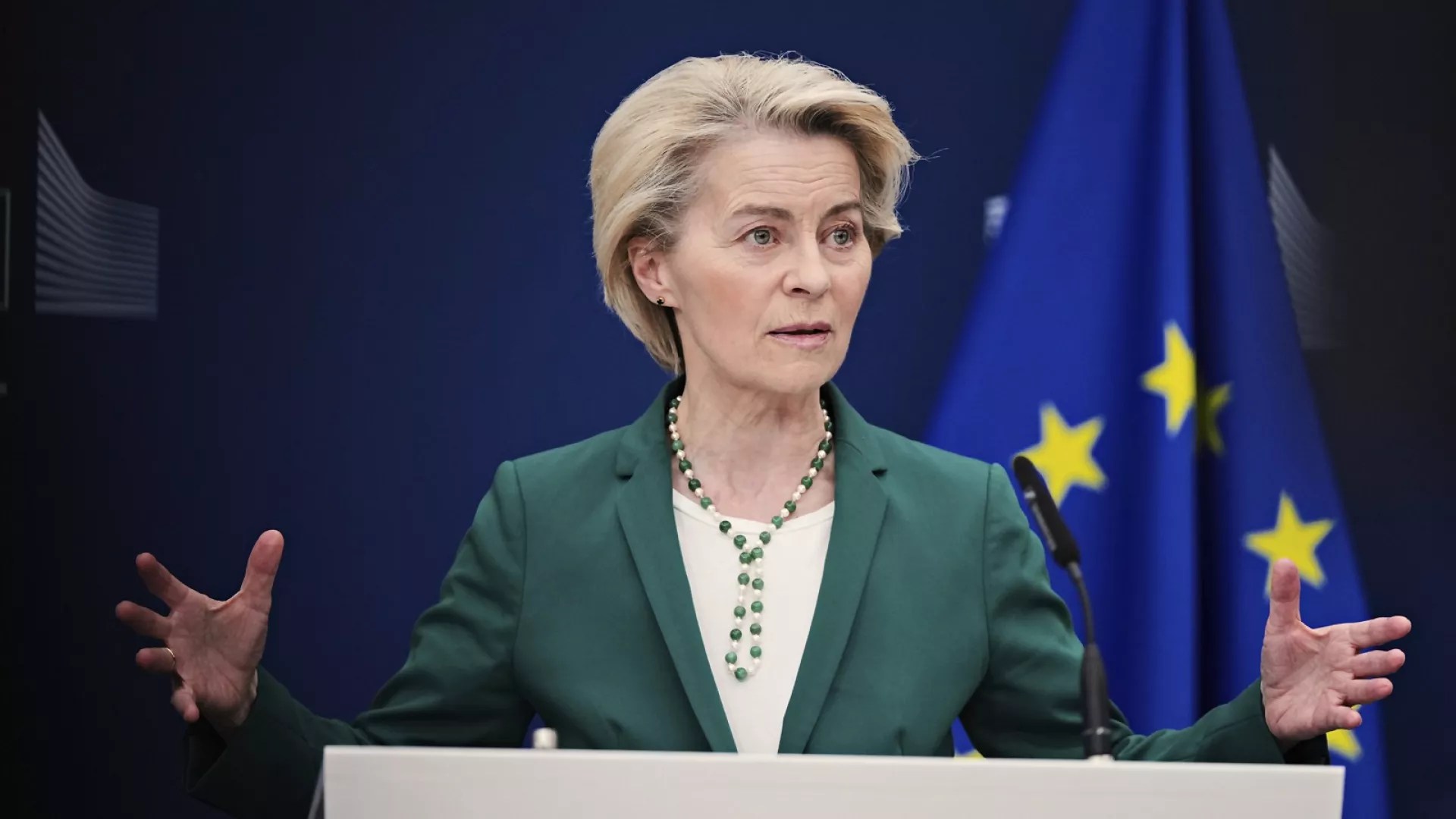
“I welcome President Trump’s announcement to pause reciprocal tariffs. It’s an important step towards stabilising the global economy.”
What does it mean to Ireland?
Ireland is one of the most vulnerable countries to the U.S. tariffs. Ireland depends on the U.S. for goods and services. Roughly 30% of Ireland’s total exports go to the U.S. — it’s Ireland’s largest single trading partner. About 900 U.S. companies operate in Ireland and directly employ up to 210,000 people — around 10–11% of Ireland’s entire workforce.
All these numbers are directly connected to Irish revenue, which benefits a lot from the corporate taxes coming from multinational companies, making up to a fifth of its GDP.
Estimates indicate that up to 80,000 jobs, nearly half of the workforce in Ireland’s multinational sector, are at risk due to these tariffs. The tariffs could lead to a reduction in Irish exports by 2-3% over time, impacting sectors such as pharmaceuticals, technology, and agri-food.
Pharma
The world’s 10 largest drugmakers, including US companies Johnson & Johnson, Pfizer and Merck, all have large plants in Ireland and pharmaceuticals are a driver of Irish exports.
According to The Telegraph, approximately 45,000 people are employed in Ireland’s pharmaceutical industry, which exports around £50 billion worth of products to the United States annually.
President Trump has expressed a desire to bring those manufacturing jobs back to America.
While concerns that he might announce a 25 percent tariff specifically targeting pharmaceuticals on “Liberation Day” did not happened, officials in Dublin remain worried that such a measure may still be possible.
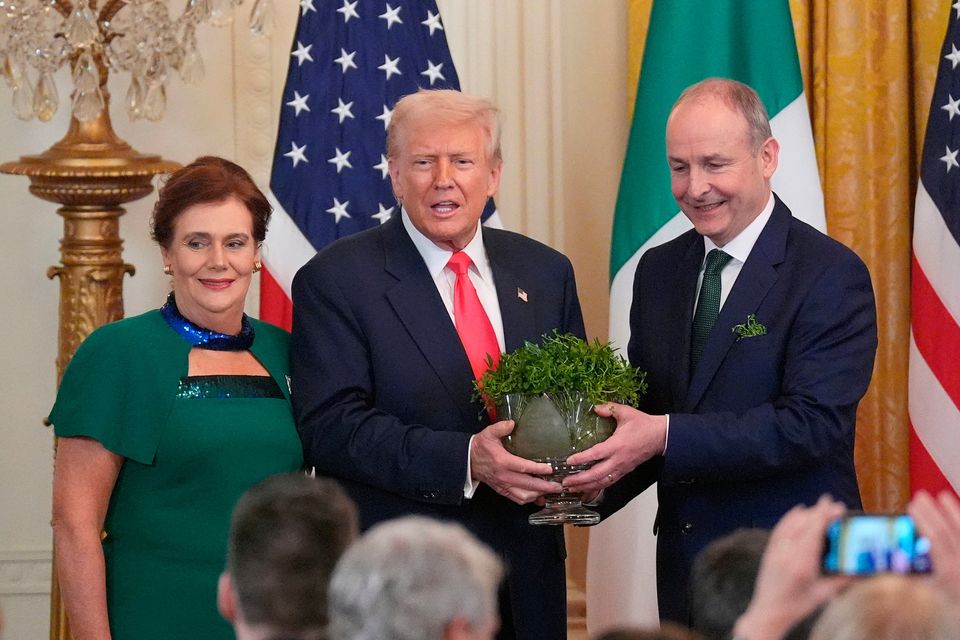
“Ireland has our pharmaceutical companies, this beautiful island of five million people has got the entire US pharmaceutical industry in its grasp,” Mr Trump said when meeting with Mr Martin in March.
Tech & Tax
Ireland’s tech sector, home to major multinationals like Apple, Microsoft, and Google, could face serious headwinds under President Trump’s new tariffs. These companies initially established their European headquarters in Ireland, drawn by its favorable corporate tax rate — once as low as 12.5%. However, following pressure from the European Union, Ireland raise its corporate tax rate to 15%, diminishing some of its competitive edge.
With Trump’s tariffs now targeting EU exports, including those from Ireland, the cost of operating from Ireland may rise further for U.S. based tech giants. Trump is aiming to onshore tech jobs and offer incentives for the tech giants to transfer back intellectual property, which would further hit tax revenue. If these tariffs significantly affect the flow of goods and services between Ireland and the U.S., companies may begin to reassess their European strategies. In some cases, relocating parts of their operations back to the U.S. could become a more financially sound decision, especially if it means avoiding additional trade penalties.
While no immediate moves have been announced, the threat of long-term structural changes to Ireland’s role as a tech hub is very real.
Conclusion
With the 90-day pause on tariffs, the world is watching closely to see what comes next. Ireland is especially vulnerable, as it depends heavily on U.S. trade and multinational companies. Even small shifts in American policy can affect the economic landscape in Ireland. While the pause offers some short-term relief, it won’t last forever. If a long-term agreement isn’t reached, Ireland — and the global trade system — could face serious disruption.
 Nazar Tarnavskyi
Leave a comment